If you’ve ever sat in the chair of a spa or clinic wondering whether to book a HydraFacial or a regular facial, you’re not alone. Both treatments promise glowing skin but they’re fundamentally different in how they work, the results they deliver, and the experience they provide.
Understanding these differences will help you make the right investment for your skin, your budget, and your goals. Let’s break it all down.
What Is a Regular Facial?
A regular facial sometimes called a classic or traditional facial is a manual skincare treatment performed by an aesthetician. It typically involves cleansing, steaming the skin to open pores, manual exfoliation (using a scrub or cloth), manual extractions (squeezing out blackheads and clogged pores), a face mask, and a moisturizing finish.
Regular facials vary widely depending on the spa, the aesthetician, and the specific type (European facial, anti-aging facial, brightening facial, etc.). The quality and results can differ significantly from place to place.
What Is a HydraFacial?
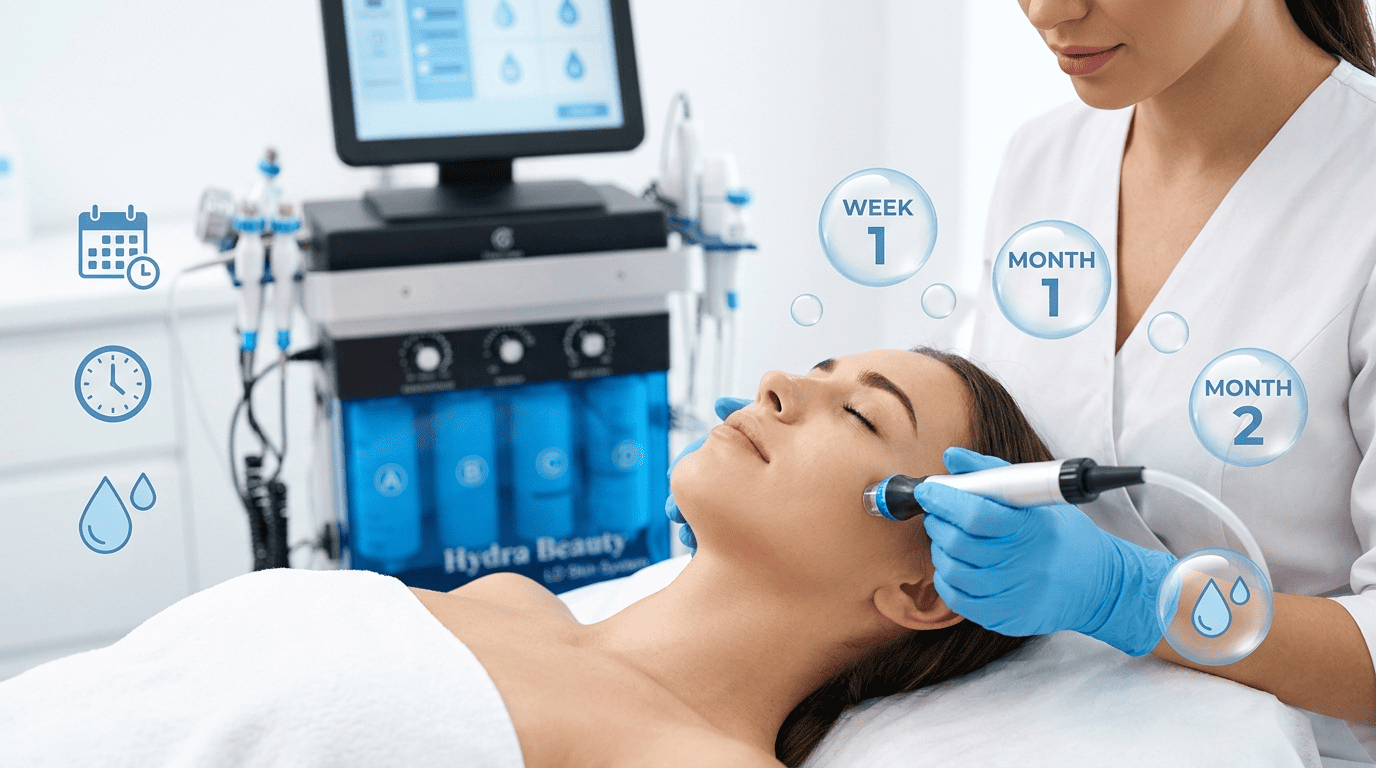
A HydraFacial is a standardized, technology-driven treatment using a patented medical-grade device. It combines cleansing, chemical exfoliation (mild glycolic/salicylic peel), vacuum-powered extraction, and deep hydration via Vortex-Fusion technology all in a single, consistent session.
Because the HydraFacial uses a standardized device and protocol, the results are highly consistent regardless of where you go. The treatment is customizable based on the serums and boosters used, but the foundational process remains the same.
Key Differences: HydraFacial vs Regular Facial
Technology vs. Technique: Regular facials rely on the manual skill of the aesthetician. A great aesthetician can produce great results, but the experience is heavily skill-dependent. HydraFacial uses a device-driven approach that delivers consistent outcomes regardless of individual technician variation.
Extraction Method: Manual extractions in a regular facial can be uncomfortable, sometimes leaving redness, swelling, or even post-extraction marks. HydraFacial uses painless suction to remove impurities no squeezing, no irritation, no marks.
Hydration Delivery: Regular facials apply serums and moisturizers topically on the skin’s surface. HydraFacial’s Vortex-Fusion technology infuses serums directly into the freshly exfoliated skin, resulting in deeper absorption and longer-lasting hydration.
Downtime: Some regular facials particularly those with aggressive extractions or strong peels can leave skin red or sensitive for 24–48 hours. HydraFacial has zero downtime. Your skin looks better immediately after treatment.
Consistency of Results: Because regular facials depend on individual technique, results can vary. HydraFacial’s standardized protocol means you get a reliably consistent result every time.
Results: Which Lasts Longer?
Regular facials typically provide results that last 3–4 weeks, after which the skin begins to return to its previous condition. For lasting improvement, regular monthly sessions are usually recommended.
HydraFacial results tend to be both more immediate and more durable. Many clients see clearer, brighter skin for 4–6 weeks after a session. With monthly maintenance, the cumulative benefits improved texture, reduced pore size, better hydration continue to build over time.
Comfort and Experience
Regular facials can vary significantly in comfort level. Manual extractions can be painful, especially around the nose, chin, and forehead. Steam application can be uncomfortable for those with sensitive skin.
HydraFacial is widely regarded as a very relaxing, comfortable experience. The suction-based extraction is painless for most clients, and the cooling serum infusion creates a pleasant, soothing sensation. It’s often called the “feel-good facial” for this reason.
Cost Comparison
Regular facials are generally more affordable, ranging from $50 to $150 depending on the spa and the type of facial.
HydraFacial is a premium treatment, typically ranging from $150 to $350 per session depending on location and added boosters. While it costs more per session, many clients find that the superior results and longer-lasting effects make it a better value overall.
Many clinics offer monthly membership packages for HydraFacial, which can bring the cost down significantly for regular clients.
Which Is Better for Your Skin?
The answer depends on your goals:
Choose a regular facial if: You’re looking for a relaxing, affordable pampering experience, your skin is in good general health, or you want a customized manual treatment tailored to that day’s specific skin needs.
Choose a HydraFacial if: You want consistent, measurable results, you have specific skin concerns (acne, hyperpigmentation, dehydration), you need zero downtime, or you’re preparing your skin for an event.
For many clients, a HydraFacial every month paired with a classic facial occasionally for deep relaxation is the ideal combination.
Not sure what your skin needs?
Book a consultation at our Clifton clinic and our doctors will build a plan around your skin.