Fractional Resurfacing Treats Small Columns of Skin
Controlled Renewal With Untreated Spaces
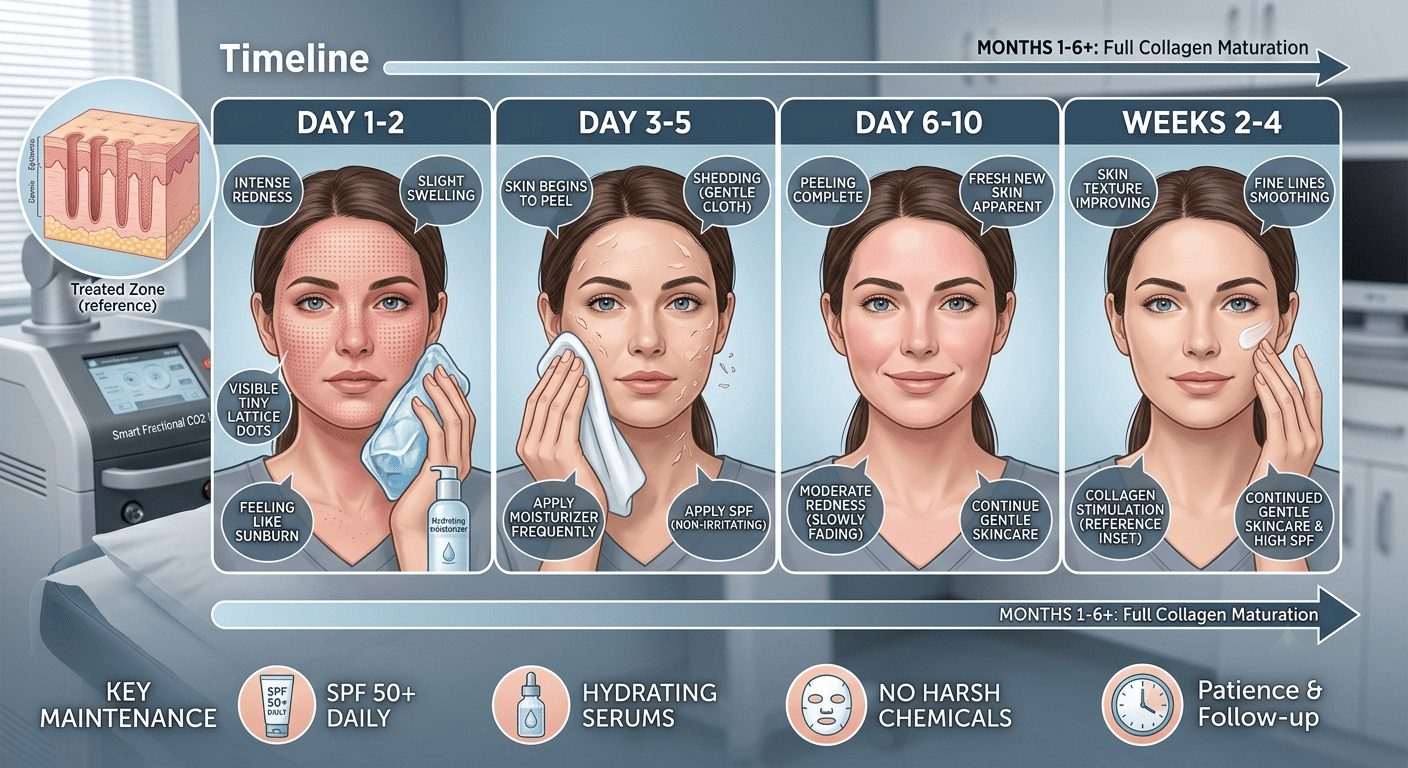
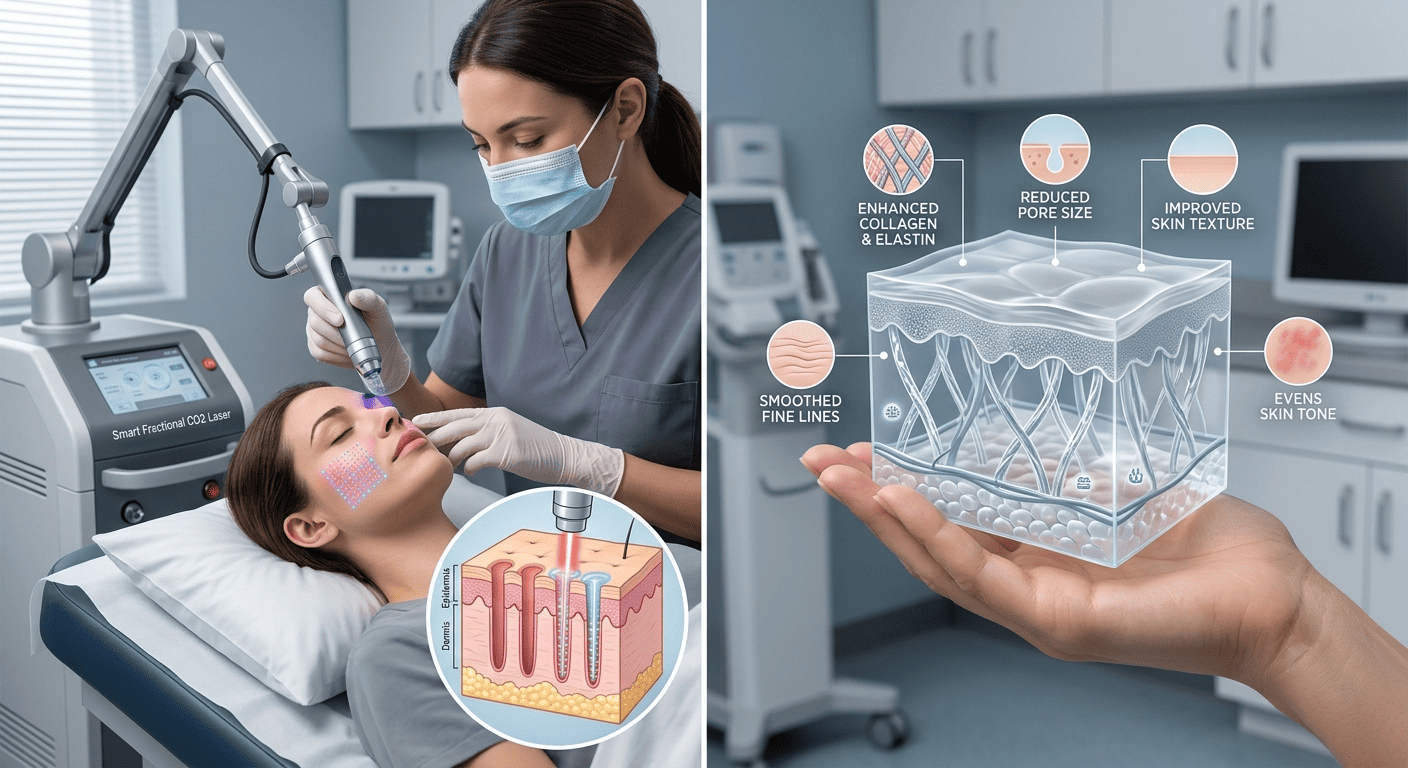
Carbon dioxide lasers are ablative devices that remove microscopic areas of damaged skin. A Smart Fractional CO2 Laser divides energy into controlled columns instead of treating the entire surface uniformly. Untreated skin between those columns supports faster healing than fully ablative resurfacing. The controlled injury also triggers collagen remodelling below the surface. Settings can vary greatly according to depth, density, pulse pattern, and concern. This flexibility is central to modern fractional treatment.
The word smart usually refers to adjustable delivery features within a specific platform. It does not mean the device selects a safe treatment without human judgement. The practitioner must choose parameters for skin tone, thickness, and recovery tolerance. Stronger treatment can create more change but also more downtime and risk. Lighter settings may require a series rather than one intensive session. A balanced plan matches improvement goals with acceptable recovery.
Texture Can Become Smoother and More Even
Surface Quality Often Improves Gradually
Rough texture can result from sun damage, scarring, enlarged pores, or uneven cell turnover. The Smart Fractional CO2 Laser can resurface selected areas while encouraging new collagen formation. As healing progresses, the surface may feel smoother and reflect light more evenly. Changes continue after visible peeling has ended because collagen remodelling takes time. Results are usually clearer after several weeks or months. Consistent photography helps reveal improvements that daily observation may miss.
Texture concerns rarely exist at the same depth across the face. The cheeks may need more intensive work than the forehead or jawline. A skilled practitioner can adjust density and energy by treatment zone. They should protect delicate areas and avoid unnecessary overlap. This tailored approach reduces the temptation to use one aggressive setting everywhere. Precision supports a more even recovery and natural finish.
Acne Scars May Respond to Collagen Remodelling
Scar Type Determines the Strategy
Atrophic acne scars include rolling, boxcar, and ice pick patterns. A Smart Fractional CO2 Laser may improve selected rolling and boxcar scars by stimulating remodelling and resurfacing edges. Deep narrow scars often need techniques such as punch treatment or chemical reconstruction. Tethered scars may respond better after subcision releases deeper bands. Therefore, laser alone is not always the complete solution. A scar assessment should identify each pattern before treatment.
Multiple sessions are commonly needed because scars change gradually. Improvement means softer depth and texture rather than perfectly flat skin. The provider may combine laser with other procedures over several months. Spacing allows collagen response and pigment changes to settle. Aggressive treatment too soon can increase irritation and prolonged redness. A staged plan often creates safer and more realistic progress.
Fine Lines Can Soften Through Resurfacing
Collagen Support Improves Skin Quality
Fine lines develop through movement, collagen loss, dryness, and sun exposure. The Smart Fractional CO2 Laser can reduce etched surface lines by renewing skin and stimulating deeper repair. Lines around the mouth may require careful settings because the area moves frequently. Expression lines caused mainly by muscle activity may need another treatment. Deeper folds linked to volume loss will not disappear through resurfacing alone. Combining diagnosis with technology prevents unrealistic promises.
Skin can appear firmer as collagen reorganises during the months after treatment. This change is usually gradual and should remain natural. Laser resurfacing is not equivalent to a surgical face or neck lift. It works best for quality, fine texture, and selected wrinkles. Daily sun protection helps preserve the improvement. Smoking and repeated sun damage can reduce long term benefit.
Pigmentation May Improve With Careful Selection
Heat Can Help or Harm Depending on the Condition
Sun spots and uneven tone may improve when damaged surface cells are removed. The Smart Fractional CO2 Laser must be used cautiously in melanin rich skin because inflammation can trigger pigment change. Melasma can also worsen after heat or irritation in some clients. A dermatologist may recommend pre treatment skincare or another device instead. Recent tanning and active sunburn are reasons to delay treatment. The safest plan begins with an accurate pigment diagnosis.
Post inflammatory hyperpigmentation can appear after an otherwise successful procedure. Risk reduction includes conservative settings, sun avoidance, and careful aftercare. Some clients need pigment controlling products before and after treatment. Those products should be supervised because irritated skin tolerates fewer actives. The clinic should explain the possibility of temporary darkening. Transparent counselling is especially important for darker skin tones.
Customisation Is the Main Practical Advantage
The Practitioner Controls the Balance
Modern fractional platforms allow treatment intensity to be adapted to different goals. A qualified provider can use the Smart Fractional CO2 Laser for lighter resurfacing or deeper corrective work. They should consider medical history, cold sores, medication, scarring tendency, and healing capacity. Eye protection, sterile technique, and appropriate cooling are essential. Aftercare should include cleansing, ointment, moisture, and strict sun protection. These details influence safety as much as the device itself.
Good candidates accept downtime and understand that recovery is part of the treatment. They also follow instructions rather than picking flakes or applying strong skincare early. Results vary according to concern, depth, age, and collagen response. A consultation should include alternatives with less downtime. The most powerful setting is not always the most suitable setting. Smart resurfacing means making careful choices before, during, and after treatment.
Not sure what your skin needs?
Book a consultation at our Clifton clinic and our doctors will build a plan around your skin.