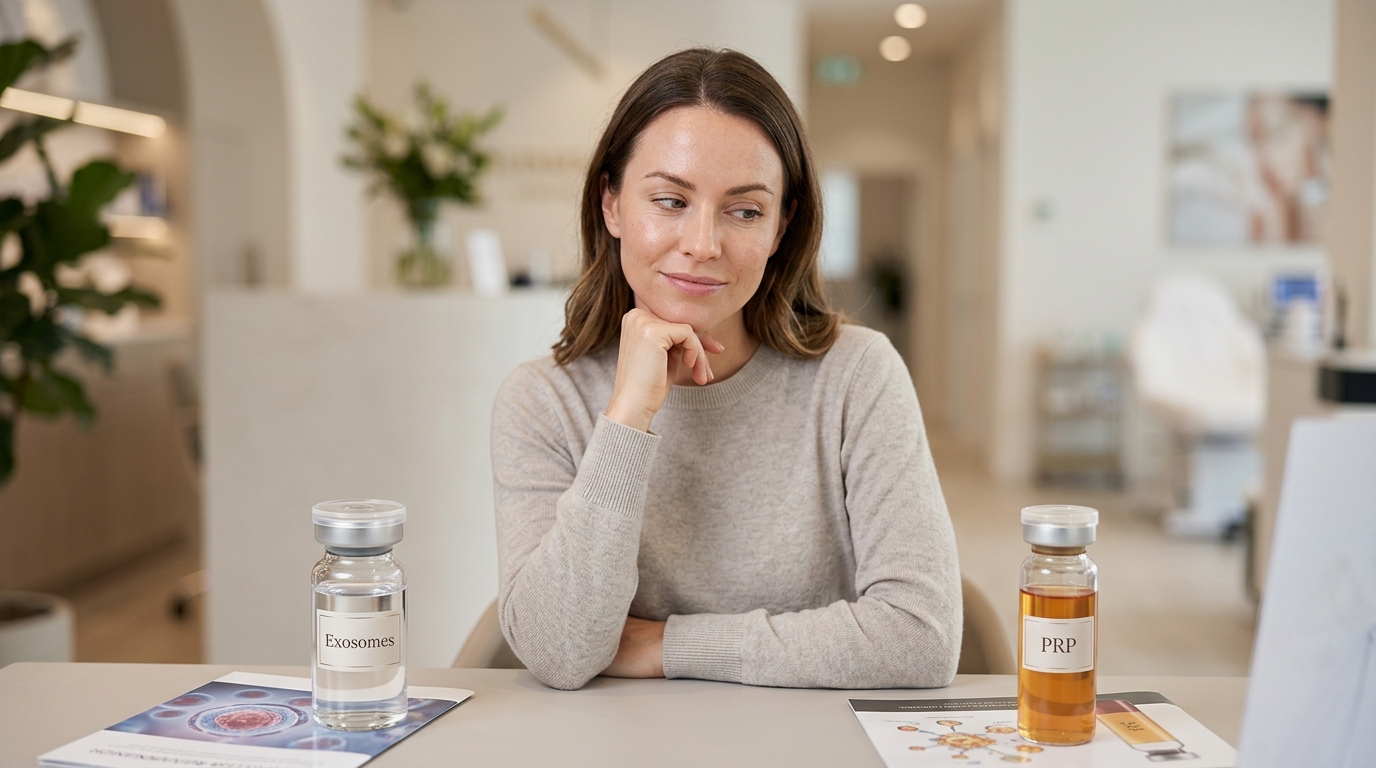
Exosomes and PRP both help your skin repair and renew itself. The main difference is the source. PRP comes from your own blood, while exosomes are prepared in a lab and need no blood draw. The right choice depends on your skin goals, your comfort level and your doctor’s advice.
What Are Exosomes?
Exosomes are tiny particles that cells use to send messages. They carry proteins and growth factors that tell skin cells to repair and renew.
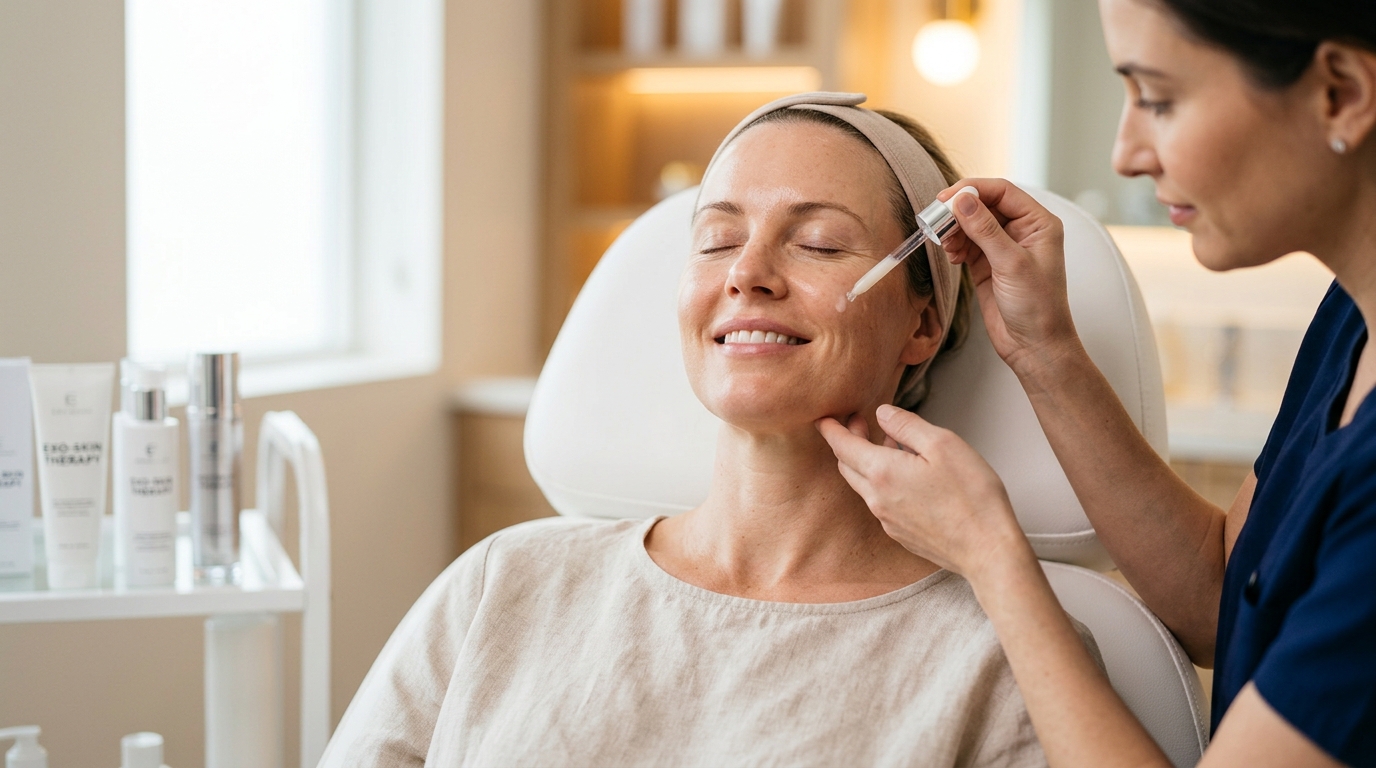
In clinics, doctors use purified exosomes prepared in a lab. They usually apply them after microneedling or laser treatment. As a result, the skin absorbs them more deeply and heals faster.
What Is PRP Treatment?
PRP stands for platelet-rich plasma. It uses your own blood to boost natural healing in the skin and scalp.
First, a doctor draws a small amount of blood. Then, a machine separates the platelets from the rest of the blood. Finally, the doctor applies or injects this concentrate into the treatment area. Many people know it as the “vampire facial.”
Source and Comfort
For some people, the blood draw decides it. If needles make you anxious, exosomes may feel easier.
Consistency of Results
PRP quality depends on your own health, age and platelet count. Exosomes, on the other hand, come as a ready-made product. However, product quality varies by brand, so sourcing matters.
Exosomes for Hair Loss vs PRP for Hair
Both treatments can support thinning hair. They work best for early hair loss, not fully bald areas.
Exosomes for hair loss are a newer option, and some patients choose them because they skip the blood draw. Either way, a doctor should first check the cause of your hair loss, since hormones, stress or nutrition may play a role.
Which Treatment Suits Your Skin?
Base your choice on your skin concern, comfort and budget rather than trends. A skin assessment makes the decision much clearer.
Exosomes may suit you if you want to avoid a blood draw or want faster calming after laser treatment. PRP may suit you if you prefer using your body’s own material. Some doctors also combine both in one plan. Either way, honest advice matters more than what’s trending on Instagram.
Safety, Downtime and Aftercare
Both treatments are generally well tolerated when a qualified doctor performs them. Mild redness, swelling or tenderness may last a day or two.
Afterwards, avoid makeup, saunas and heavy workouts for a short time. Apply sunscreen every day. Also, avoid both treatments if you are pregnant or have an active skin infection, unless your doctor says otherwise.
Conclusion: Exosomes or PRP?
Exosomes and PRP are both strong options for natural skin and hair renewal. Neither one is best for everyone. Your skin type, goals and medical history decide the right fit.
At SK’N Theory in Clifton, Karachi, doctors assess your skin before suggesting a plan. Book a consultation to find out whether exosomes, PRP or a combination suits you best.
Frequently Asked Questions
Are exosomes better than PRP?
Neither is better for everyone. Exosomes need no blood draw and come as a more standardised product. PRP uses your own blood and has a longer research history. The best choice depends on your goals, comfort and medical history, so a doctor’s assessment helps.
Can exosomes and PRP be combined?
Yes, some doctors combine both in one treatment plan. PRP may support healing, while exosomes add extra repair signals. However, combining them isn’t always necessary. Your doctor will decide based on your skin or scalp concern and how your skin responds.
Do exosomes work for hair loss?
Exosomes for hair loss may help support weak follicles and scalp health. They tend to work best for early thinning. Results vary, and research is still developing. A doctor should find the cause of your hair loss before recommending treatment.
Which is more painful, exosomes or PRP?
Both usually involve microneedling or injections, so mild discomfort is possible. Doctors apply numbing cream to keep you comfortable. PRP also needs a blood draw, which some people find uncomfortable. Overall, most patients tolerate both treatments well.
How many sessions of exosome therapy do I need?
Most people need a series of sessions spaced a few weeks apart. The exact number depends on your concern, skin condition and goals. Your doctor will plan the course after assessing your skin, and results usually build gradually.
Not sure what your skin needs?
Book a consultation at our Clifton clinic and our doctors will build a plan around your skin.