There Is No Universal Starting Age
Skin Condition Matters More Than a Birthday
People age at different speeds because genetics, sun exposure, and lifestyle vary. For this reason, HIFU treatments should be considered according to visible laxity rather than a fixed birthday. One person may notice early jawline softness in the thirties. Another may retain firm skin well into the forties. Starting too early can add cost without providing a meaningful benefit. A proper assessment prevents treatment based on anxiety alone.
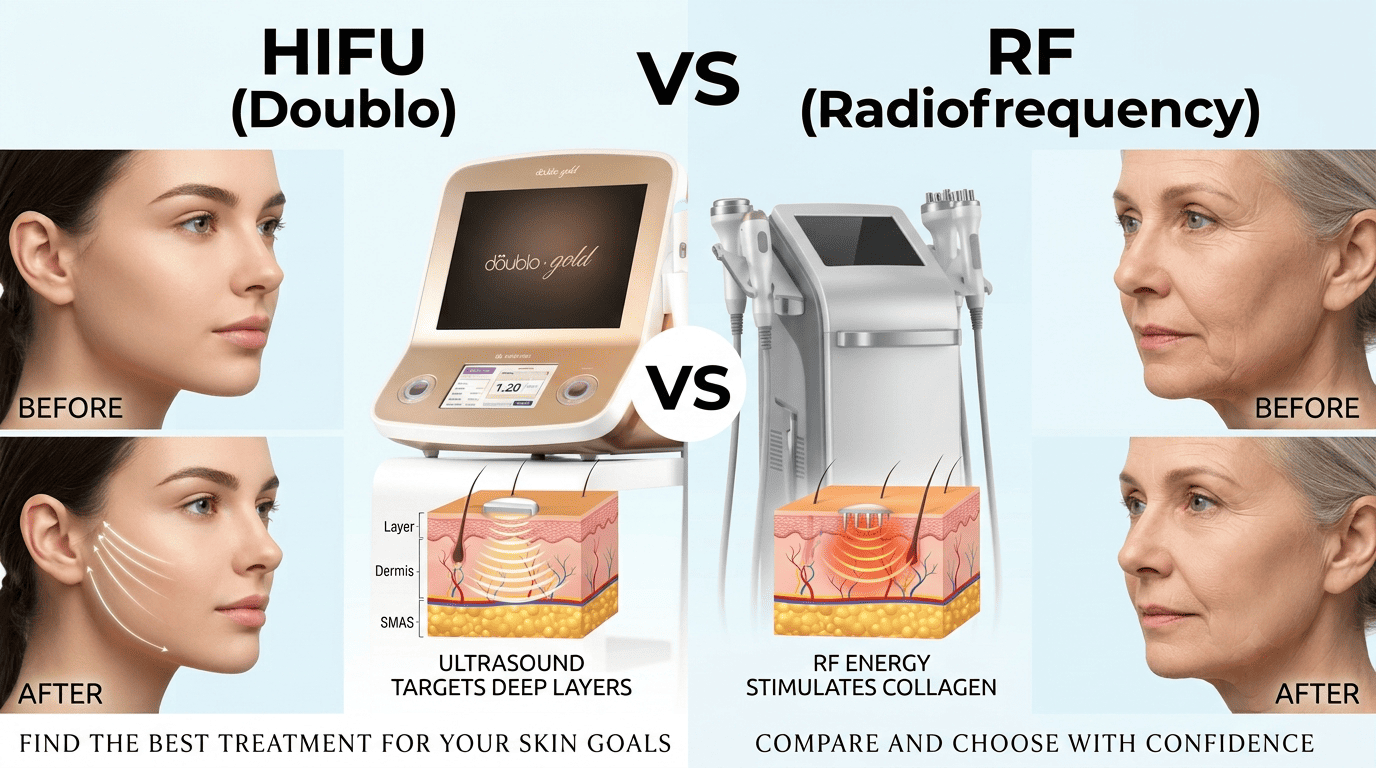
HIFU uses focused ultrasound to create controlled thermal points below the surface. The aim is to stimulate collagen response and support gradual tightening. It works best when expectations remain subtle and realistic. It cannot replace lost volume, correct every wrinkle, or duplicate surgery. The provider should identify the exact tissue causing the concern. That diagnosis helps determine whether HIFU is appropriate at all.
Your Twenties Usually Focus on Prevention Basics
Protect Collagen Before Treating Laxity
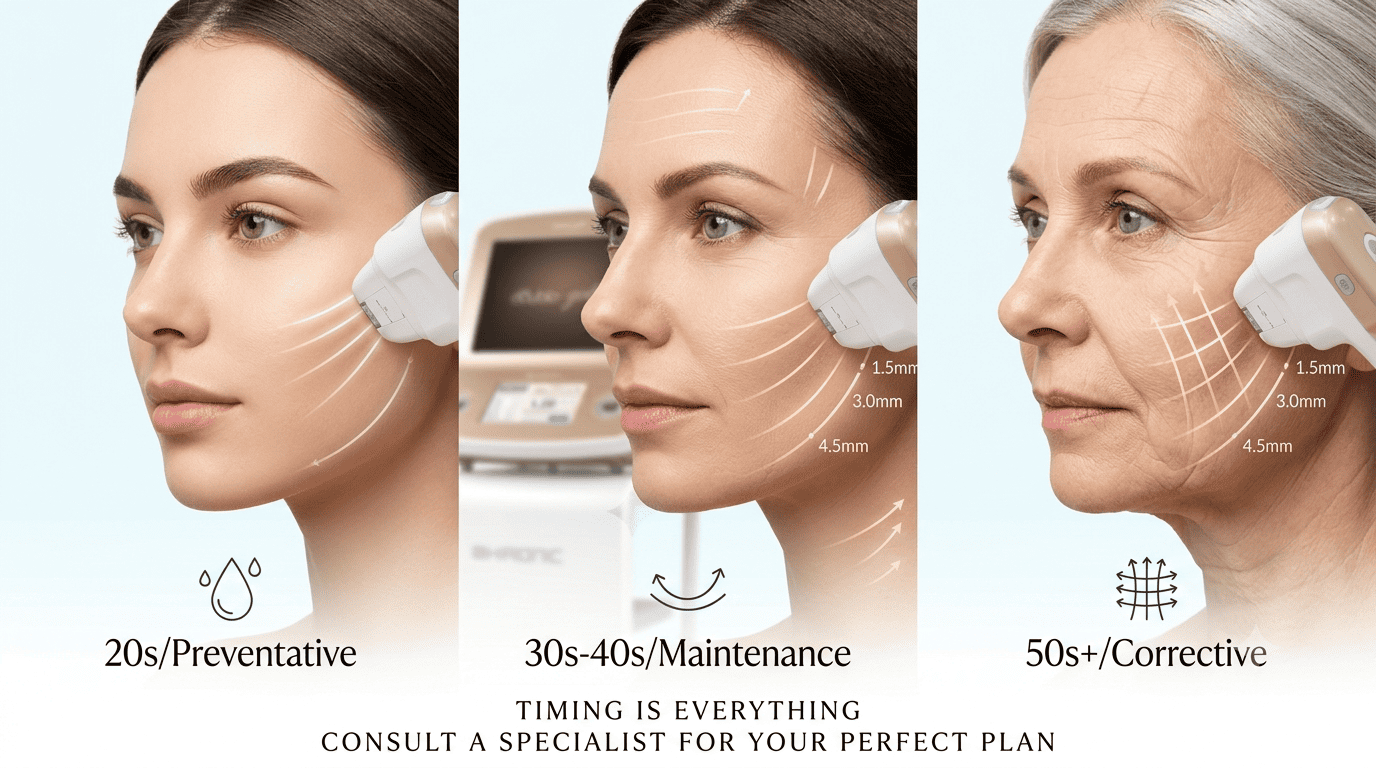
Most people in their twenties do not need energy based lifting procedures. Routine HIFU treatments are rarely the first answer when the skin remains firm and resilient. Daily sunscreen, balanced skincare, sleep, and avoiding smoking offer broader value. Acne, pigmentation, and texture may require different targeted treatments. A naturally soft face should not automatically be labelled as sagging. Professional advice can distinguish anatomy from early ageing.
There are exceptions when weight change, genetics, or medical factors affect tissue support. Even then, the practitioner should explore the full cause before treating. A conservative approach protects facial volume and avoids unnecessary procedures. Young clients should be cautious of packages marketed as mandatory prevention. Preventive care does not mean treating every possible future change. It means supporting healthy skin and intervening only when there is a clear indication.
The Thirties Can Bring Early Structural Changes
Mild Laxity May Become Noticeable
Collagen production gradually changes, and facial movement creates more persistent lines. Some clients explore HIFU treatments in their thirties when mild jawline or brow laxity appears. The concern should be visible during assessment, not only under harsh lighting. Early treatment may support definition without changing natural expression. However, dehydration and volume loss can mimic loose skin. The practitioner must separate these issues before recommending energy.
A single conservative session may be enough for an appropriate younger candidate. Results generally develop over time rather than appearing dramatically on the day. Maintenance should depend on how the skin responds and continues ageing. Repeating treatment too frequently may not improve the outcome. Photographs taken in consistent lighting help track subtle progress. A measured plan protects both tissue and budget.
The Forties Are a Common Consultation Stage
Treatment Goals Become More Defined
During the forties, many people notice changes around the lower face and neck. Well planned HIFU treatments may suit mild to moderate laxity in these areas. The face may also show volume loss, pigmentation, and surface texture changes. Those concerns often need separate or combined strategies. HIFU may provide support, while skincare or lasers address tone and texture. A complete plan prevents one procedure from carrying unrealistic expectations.
Facial structure strongly influences the amount of visible improvement. A heavier lower face responds differently from a lean face with limited fat. Some clients may benefit from RF, injectables, or surgical consultation instead. The provider should discuss what HIFU can and cannot change. Subtle lifting often looks more natural than aggressive energy delivery. Conservative planning is especially important when facial volume has already reduced.
The Fifties and Beyond Need Broader Assessment
Advanced Laxity May Require Other Options
Age alone does not exclude someone from non surgical treatment. Still, HIFU treatments may offer limited change when laxity is advanced or tissue is heavy. Clients should understand the difference between improvement and transformation. Energy based care can sometimes refine firmness without replacing surgery. Other concerns such as bone change and volume loss become more important. A comprehensive consultation helps set an honest treatment goal.
Health history and skin quality also influence treatment planning later in life. The provider may use lower settings, different depths, or a staged approach. They should also review medications, implants, nerve conditions, and previous procedures. Recovery is usually manageable, but tenderness or swelling can occur. A careful plan prioritises safety over delivering a high number of shots. Good treatment respects the face that exists rather than chasing a younger template.
A Consultation Should Decide the Timing
Look for Clear Clinical Reasoning
The right time to begin depends on anatomy, concern, and expected benefit. Before booking HIFU treatments, ask the practitioner to show where laxity is present and which depth they plan to target. They should explain whether volume loss or skin quality needs another solution. They should also discuss realistic timelines, maintenance, and possible side effects. A recommendation without assessment should raise concern. Treatment is most valuable when it solves a defined problem.
For many clients, the best anti-aging plan starts with daily sun protection. Procedures can then be added gradually as genuine changes appear. This approach avoids unnecessary treatment in younger years. It also leaves room for better matched options later. Age can guide the conversation, but it should never make the final decision. Healthy ageing is personal, and the treatment schedule should be personal too.
Not sure what your skin needs?
Book a consultation at our Clifton clinic and our doctors will build a plan around your skin.