The Technologies Heat Tissue in Different Ways
Depth Is the Starting Point
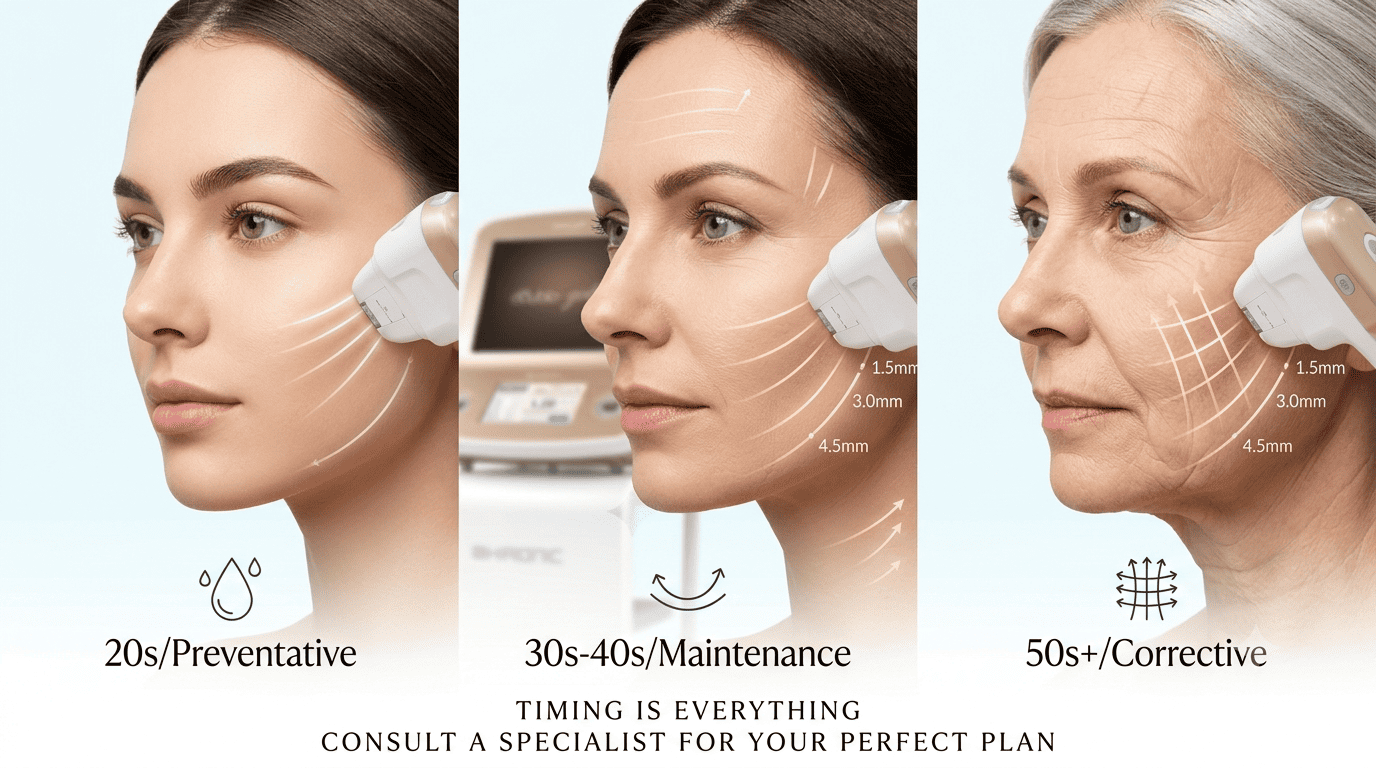
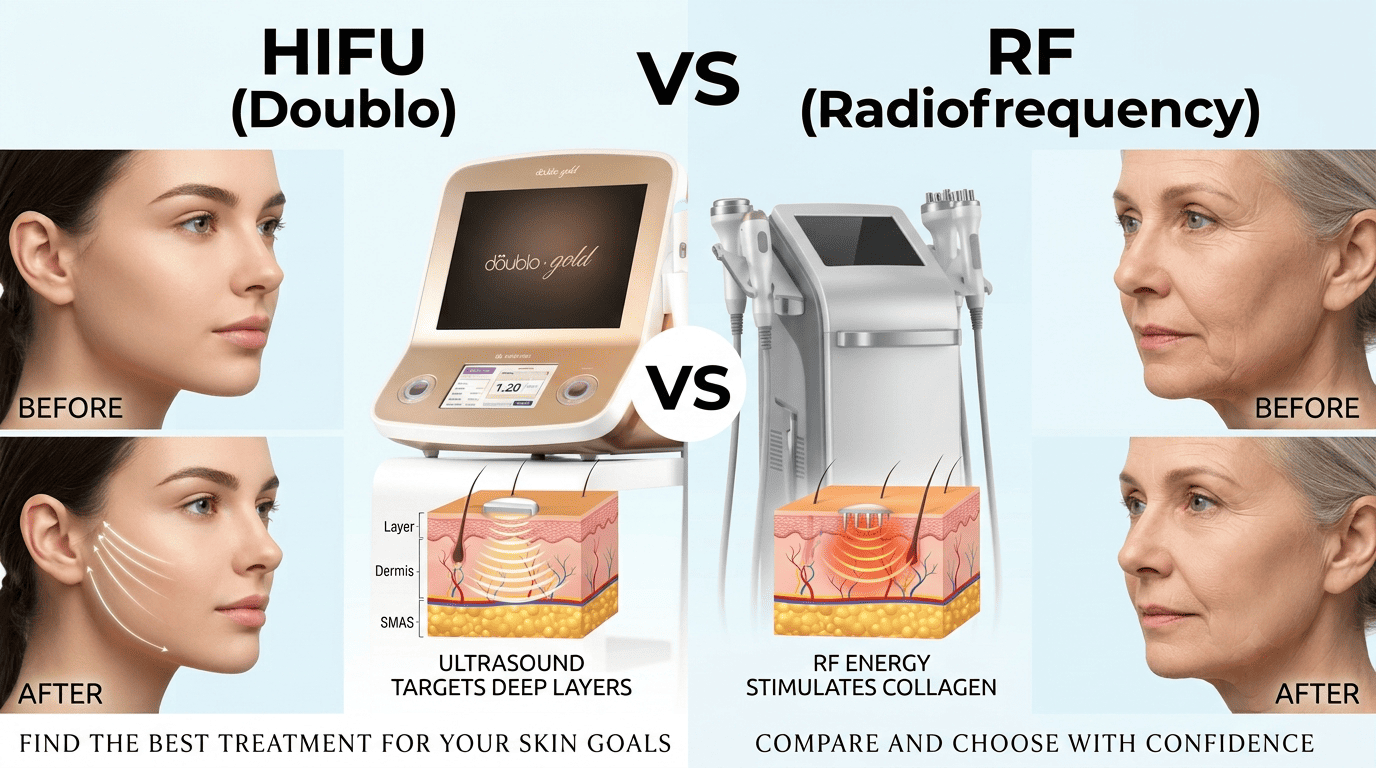
HIFU and radiofrequency both stimulate tissue through controlled energy, but their delivery differs. The Doublo HIFU System uses focused ultrasound to target selected depths beneath the skin. Standalone RF treatments use electrical energy to create controlled heating within chosen tissue layers. Different RF devices may work superficially, deeply, or through insulated microneedles. Therefore, comparing names alone can create a misleading picture. The exact device, settings, and treatment depth matter greatly.
Focused ultrasound is often selected when lifting and contour support are priorities. RF may be chosen for firmness, texture, or broader collagen stimulation. Some modern platforms can combine ultrasound and RF within coordinated protocols. However, combination treatment does not suit every face or concern. A practitioner must assess skin thickness, fat distribution, and laxity. Technology should follow anatomy rather than replace careful evaluation.
Your Main Goal Helps Define the Better Choice
Lifting and Texture Are Not Identical
Clients often use the word tightening for several different concerns. The Doublo HIFU System may be considered for mild to moderate sagging around the jawline, lower face, or neck. RF treatments may help when surface crepiness, texture, and general firmness are more noticeable. RF microneedling can also address pores or certain acne scars. A single treatment cannot correct every layer of facial ageing. Separating the concerns leads to a more accurate recommendation.
Volume loss can sometimes look like looseness even when skin is not the main issue. In that case, energy treatment alone may create a disappointing result. Likewise, heavy tissue or advanced laxity may require another approach. Photographs and facial movement can help the practitioner understand the pattern. The plan should preserve natural volume while improving the selected area. A better diagnosis usually matters more than choosing HIFU or RF.
Comfort and Downtime Vary by Device
The Sensation Is Not the Same
Focused ultrasound can create brief pulses of heat, tingling, or deep tenderness. Treatment with the Doublo HIFU System should be adjusted according to anatomy and tolerance. RF may feel like gradual warmth, small pinches, or deeper heat depending on the platform. RF microneedling adds needle related sensation and visible recovery. Topical numbing may be used for some procedures but not all. A clear comfort plan should be discussed before treatment begins.
Non invasive HIFU and non invasive RF often involve little interruption to daily life. Temporary redness, swelling, tenderness, or altered sensation can still occur. Microneedle RF usually produces more visible redness and pinpoint marks. Recovery also depends on intensity, treatment area, and personal sensitivity. Clients should not choose a device solely because it is described as painless. Honest preparation makes the experience easier to manage.
Results Develop on Different Timelines
Collagen Change Takes Patience
Energy based tightening is not designed to create an instant surgical lift. The Doublo HIFU System can trigger gradual tissue response that becomes more noticeable over the following months. RF results can also build progressively as collagen remodelling continues. Some people notice early firmness from temporary tissue contraction or reduced swelling. The more meaningful change usually appears slowly and remains subtle. Standardised photographs help clients judge progress more fairly.
The number of sessions differs across devices and treatment plans. Some HIFU protocols are performed as a single session with later review. Many RF plans involve a short series followed by maintenance. RF microneedling schedules may use several spaced appointments. More sessions cannot compensate for unsuitable anatomy or poor technique. A realistic timeline should be agreed before payment.
Skin Type and Facial Structure Influence Suitability
Safety Requires Individual Assessment
Energy treatments must be planned around the thickness and condition of the tissue. A trained provider uses the Doublo HIFU System with appropriate depth, placement, and energy selection. They should avoid areas where nerves, bone, or limited soft tissue require caution. RF settings also need adjustment for skin sensitivity and treatment purpose. Active infection, severe inflammation, and certain medical conditions may delay treatment. Full health disclosure supports safer decision making.
Very lean faces require special care because excessive volume reduction may look ageing. Heavier lower faces may respond differently from fine, mildly lax tissue. Skin tone is only one part of the suitability assessment. Scarring tendency, previous procedures, fillers, and implants may also matter. The practitioner should explain both benefits and limitations for your anatomy. Generic treatment plans often miss these important details.
Sometimes the Best Answer Is a Staged Combination
One Device Does Not Need to Win
HIFU and RF can complement each other when each has a clear role. The Doublo HIFU System may address deeper lifting while a separate RF treatment supports surface firmness or texture. However, treatments should be spaced and sequenced with recovery in mind. Combining everything in one visit can increase discomfort and inflammation. A staged approach allows the clinic to assess each response. It also prevents spending on steps that may not be necessary.
The better treatment is the one matched accurately to your concern. Ask which tissue layer the practitioner intends to target and why. Request realistic examples from clients with similar facial structure. Discuss downtime, maintenance, possible side effects, and alternative options. A trustworthy recommendation may include HIFU, RF, both, or neither. That honesty is more valuable than declaring one technology universally best.
Not sure what your skin needs?
Book a consultation at our Clifton clinic and our doctors will build a plan around your skin.