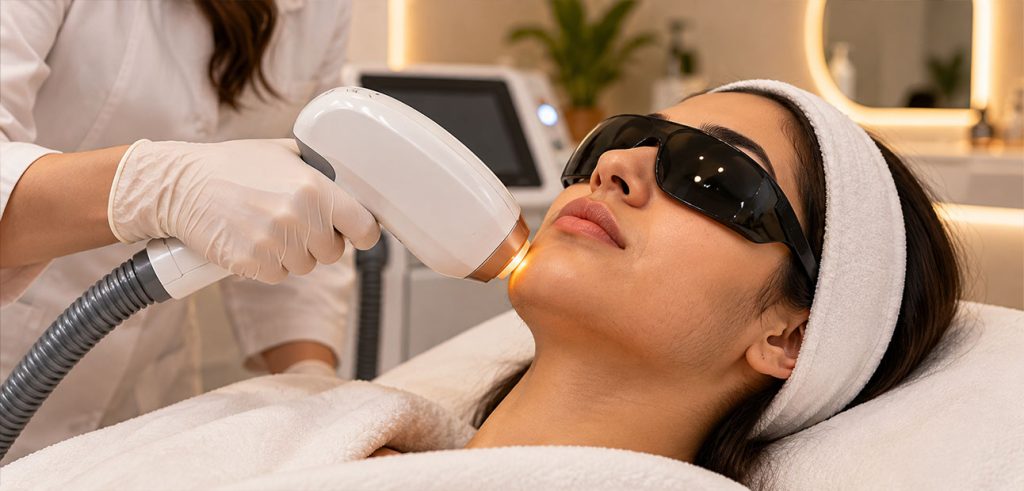

You can have laser hair removal in summer, as long as the skin being treated isn’t tanned and you keep it out of direct sun before and after each session. In Karachi, the sun is strong for most of the year, so steady sun protection matters more than the month you choose to begin.
Key takeaways
- Summer itself is not the problem; tanned or sunburnt skin is.
- A tan adds pigment to the skin’s surface, which raises the risk of burns and dark patches.
- Karachi’s sun is strong in every season, so sunscreen is a year-round habit.
- Starting in the cooler months puts more of your course in easier weather.
- Your doctor may postpone a session if the area looks tanned.
Plenty of people put off laser hair removal in Karachi until winter, then find summer has arrived and they are still threading and shaving. Waiting is rarely necessary. What you need instead is a clear plan for the sun.
Is laser hair removal in summer safe for brown skin?
Yes, for most people, provided the treated area is untanned and protected between sessions. Heat doesn’t stop the laser working; sun-darkened skin is what raises the risk.
Here’s why. The laser’s light is absorbed by melanin, the pigment in your hair, and turns into heat that damages the follicle. Coarse, dark hair responds fastest because it holds the most pigment.
Why a tan changes the picture
Melanin is also present in your skin. When you tan, the surface layer fills with extra pigment that competes with the hair for the laser’s energy. That can lead to redness that lasts longer than usual, blistering, or patches that turn darker or lighter than your natural tone.
Brown skin already carries more melanin than very fair skin. A fresh tan narrows the safety margin further, which is why your doctor may lower the settings or move your appointment.
Why the season matters less in Karachi
Karachi’s sun stays strong in what other cities would call winter. Monsoon cloud is not a shield either: up to 80% of ultraviolet (UV) radiation passes through clouds or mist, according to the International Agency for Research on Cancer. The sea breeze can also make you feel cooler while UV exposure stays high.
Everyday exposure adds up too. A daily drive with your arm near the window, a bike or rickshaw commute, or an afternoon at Clifton Beach can all tan the skin you are trying to treat.
When is the best time for laser hair removal?
The best time for laser hair removal is usually autumn or early winter. More of your sessions then fall in milder months, and you are further along by the next summer.
Still, you can start in any month if your skin is not tanned. A course needs several sessions, and most people can have one every 4 to 6 weeks, according to the American Academy of Dermatology. The spacing matters because the laser mainly affects hairs in their active growth phase, and your exact schedule is set at your consultation.
If you are working back from a big date, our guide to laser hair removal before your wedding covers that timing in more detail.
Takeaway: In Karachi, the month matters less than how much sun the treated skin is getting.
| Months | Typical weather | What it means for your laser plan |
| December–February | Mildest weather; wedding season | A comfortable time to start or continue; keep up daily sunscreen |
| March | Warming up quickly | Good for mid-course sessions; build summer sun habits now |
| April–June | Hottest, brightest months | Continue with strict sun care; covered areas such as underarms are easiest |
| July–September | Monsoon humidity and heavy sweating | UV still gets through cloud; keep skin clean, dry and covered |
| October | Heat often returns after the monsoon | Continue with care; keep beach trips away from session dates |
| November | Cooling down | A popular month to begin a course ready for the next summer |
How does sun exposure after laser hair removal affect your skin?
Freshly treated skin is more sensitive, so sun exposure after laser hair removal can make it burn or darken more easily. Protecting it after each session keeps a good treatment from becoming a pigment problem.
After treatment, most people have mild redness that settles within hours, and the treated hairs shed over the following days. Sun on irritated skin can trigger post-inflammatory hyperpigmentation, which simply means dark marks left behind after irritation. On brown skin, these marks can take a while to fade.
Heat and sweat can also irritate the follicles and occasionally lead to small bumps or infection. The same caution applies to other treatments that leave skin sensitive, which is why we also look at whether you can have a chemical peel in summer.
What sun protection do you need before and after laser?
Keep the area untanned in the weeks before a session and shielded from direct sun afterwards. Your doctor will set the exact timings for you.
Takeaway: Most of the protection happens in the weeks around each session, not on the day itself.
Before your session
- Skip sunbathing, beach days and tanning in the weeks leading up to each session.
- Avoid self-tanners and bronzing products on the area, and tell your doctor if you have used one recently.
- Apply a broad-spectrum SPF 30 or higher every day on any exposed area you are treating.
- Shave if advised, but don’t wax, thread or pluck, as these remove the root the laser needs.
- Tell your doctor about new medicines, especially antibiotics or acne tablets that make skin sun-sensitive.
After your session
- Protect treated skin from the sun for six weeks, as Mayo Clinic advises, or for as long as your doctor directs.
- Reapply sunscreen every two hours outdoors once your doctor confirms products are fine.
- Cover up with loose, light cotton: long sleeves, a dupatta or a wide-brimmed hat.
- Avoid the gym, sauna, steam and swimming until any redness has fully settled.
- Leave out scrubs, acids and fragranced products until any redness has settled.
For a fuller routine, read how to prepare for laser hair removal before your first appointment.
Who should wait before starting laser treatment?
Some people are better off postponing, and your doctor will check for this at your consultation. Waiting a few weeks is far better than treating skin that isn’t ready.
You may be asked to wait, or to avoid treatment, if you:
- have a current tan or sunburn on the area, or have just come back from a holiday
- are pregnant, as treatment is usually postponed as a precaution
- have an active infection, cold sore, rash or broken skin where you want treatment
- take medicines that increase sun sensitivity, or have recently taken isotretinoin for acne
- tend to form keloids or raised scars
- have very light, grey, white or red hair, which has too little pigment for the laser to target well
What are the risks of lasering tanned skin?
The main risks are burns, blisters and changes in skin colour, showing as darker or lighter patches. These are uncommon when skin is prepared well, but a tan makes them more likely.
Most reactions are mild: redness and slight swelling around each follicle that settle on their own. Pigment changes on brown skin, though, can linger.
Contact your clinic promptly if you notice blistering, crusting, worsening pain, signs of infection such as pus, or colour changes that don’t settle.
What happens at your consultation?
Your consultation shapes the plan around your skin and your calendar. The doctor checks your skin tone and hair type, looks for any tan, and asks about medicines and past reactions.
From there, the laser settings and number of sessions are planned, with dates arranged around travel, Eid or weddings. If your skin tans easily, a test patch on a small area may be suggested first.
How SK’N Theory approaches laser hair removal in summer
At SK’N Theory, every laser plan starts with a doctor-led assessment rather than a fixed schedule. Your skin tone, hair type and recent sun exposure are checked before any settings are chosen, and the plan takes Karachi’s year-round sun into account.
The clinic uses laser technology suited to South Asian and darker skin tones. Cooling is used during each session, which can take a few minutes for small areas or under an hour for larger ones. You leave with clear sun-care and aftercare guidance, and follow-up is built into your plan so any reaction is picked up early.
Book a consultation: If you’d rather not wait for winter, message or call us on WhatsApp 0300 702 2061 (Mon–Sat 10am–8pm, Sunday by appointment). We’ll check your skin and plan your sessions around the season.
Frequently asked questions
Can I go to the beach after a laser session?
It’s best to wait. Freshly treated skin burns and darkens more easily, and beach sun is intense because sand and water reflect UV back onto your skin. Treated skin needs protecting for several weeks, so plan trips to Sea View or Hawke’s Bay well clear of your session dates.
Should I pause my course when the weather gets hot?
Usually not. Long gaps can slow your progress, because sessions are timed to catch hairs as they grow. If you can keep the treated areas out of the sun, most people carry on through the hot months. Your doctor may adjust settings or treat covered areas, such as the underarms, first.
Can I wear sunscreen to my laser appointment?
Arrive with clean skin on the treatment area unless the clinic tells you otherwise, because creams can sit between the laser and your skin. Bring your sunscreen with you instead. Once the session is over and your doctor confirms it’s fine, apply it before you step outside.
Does sweating affect my results?
Sweat won’t undo the effect on the follicle, but heavy sweating straight after a session can irritate treated skin. Warmth and moisture can also encourage small bumps or infection around the follicles. Shower with lukewarm water, wear loose clothing, and save hard workouts until after the recommended break.
Can I still have laser if my arms are slightly tanned from driving?
Possibly, but your doctor will decide on the day. A mild tan may mean lower settings, a test spot, or treating a different area first while your arms fade. Being open about recent sun exposure helps your doctor choose settings that are safe for your skin.
Not sure what your skin needs?
Book a consultation at our Clifton clinic and our doctors will build a plan around your skin.